Tags
jaws, Killer shark, lorraine gray, Richard Dreyfus, Robert Shaw, Roy Scheider, shark movies, Steven Spielberg
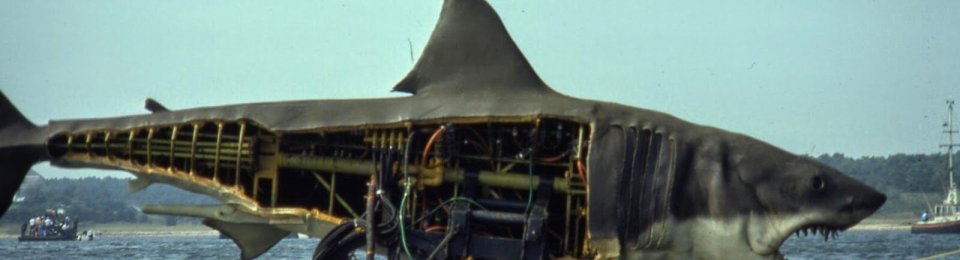
Here’s the thing about the shark: it barely worked.
It sank. It stalled. It glitched and groaned and refused to cooperate. Nicknamed “Bruce” on set, the beast spent more time in dry dock than terrorising the screen. Spielberg was 26, sleep-deprived, in over his head, and rapidly learning the only thing scarier than a killer shark was a Universal executive demanding to know why the footage still wasn’t usable.
And somehow, that mechanical failure became a cinematic miracle.
Because what Spielberg did—what Jaws did—was weaponise absence. The shark, originally meant to be front and centre, became a whisper in the dark. A shape beneath the surface. A disturbance in the rhythm of things. You didn’t see it. You sensed it. And that, it turns out, is the oldest, darkest trick in the horror book.
The great lie of movie monsters is that we want to see them. We don’t. Not really. We want to imagine them. The moment you put teeth on screen, you give the audience a sense of control. You label the fear. Spielberg yanked that control away. With John Williams’ pulsing two-note theme doing all the heavy lifting, he transformed absence into dread. The water itself became the monster.
It was Hitchcock’s Psycho shower scene stretched over two hours—and soaked in salt. This wasn’t just an accident. It was an evolution.
The lineage is everywhere. Fast forward to 1999 and you’ve got The Blair Witch Project freaking people out with sticks and sobbing. Paranormal Activity builds its terror from night-vision nothingness. It Follows delivers slow, patient doom from offscreen threats. Even Ari Aster plays coy with his demons, knowing full well that what you don’t see can stick in the brain far longer than anything prosthetic or CGI.
But Jaws did it first—because it had no other choice. And that’s what makes it genius. The ocean becomes a canvas of paranoia. The camera lingers on legs dangling from piers, swimmers bobbing like bait, empty stretches of sea humming with invisible menace. You start scanning the horizon like your life depends on it. Spielberg took a broken prop and turned it into a philosophy: less is fear.
What’s wild is how this “restraint” has been almost entirely misunderstood by Hollywood ever since. In the years that followed, the pendulum swung back to spectacle. Bigger sharks, bigger blood, more teeth, more tech. Sequels gave us full-frontal fish. Other monster movies mistook visibility for effectiveness. But the terror in Jaws came from its limits. The scariest monster in movie history only appears on screen for about four minutes. And that’s all it needed.
Because fear, real fear, comes not from what’s in front of you—but what’s lurking just out of view. It’s the ripple. The shadow. The dark shape sliding silently beneath your feet.
And in that space—between the surface and the scream—Jaws lives on.
- Saul Muerte
 Surgeons of Horror
Pingback: Still Waters Run Deep: 50 Years of Jaws” | Surgeons of Horror