Tags
danielle deadwyler, film, horror, jaume collet-serra, Movie review, movies, universal pictures, universal pictures australia
Danielle Deadwyler shines in this moody supernatural tale, but Jaume Collet-Serra struggles to fully unearth the horror at its heart.
Twenty years after House of Wax melted into mediocrity, director Jaume Collet-Serra returns to the horror genre with The Woman in the Yard, a moody, slow-burn supernatural tale that teases tension but never quite takes root. There’s a welcome sense of restraint this time around — a desire to craft something more grounded, more psychological — but the final product ends up feeling more undercooked than unnerving.
Danielle Deadwyler is the anchor of the film, delivering a committed and emotionally charged performance as Ramona, a grieving widow attempting to hold her family together after her husband’s sudden death. Deadwyler brings texture and soul to every scene she’s in — her presence commands attention and breathes life into an otherwise uneven script. Whether she’s shielding her children from the unknown or confronting her own internal anguish, she elevates the material with quiet fury and vulnerability.
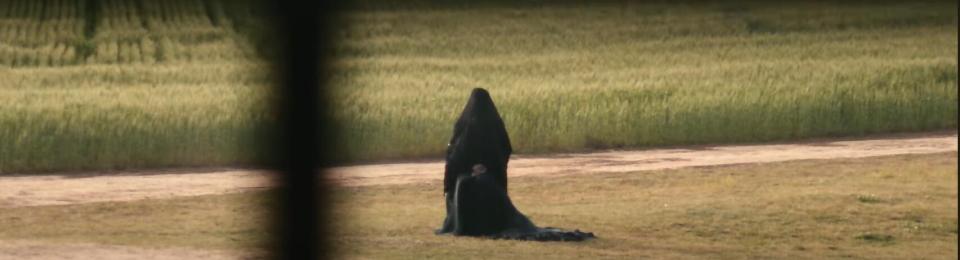
The premise has potential: a mysterious woman appears on the property — expressionless, enigmatic, and perhaps not entirely human. The creeping dread builds in the first act with genuine intrigue. But instead of snowballing into something harrowing, the film meanders, content to rely on vague symbolism and atmospheric shots without connecting the emotional stakes to the horror elements. The titular woman remains more concept than character — a spectral threat with no real grip on the narrative beyond metaphor.
Collet-Serra shows flickers of maturity here, eschewing the slick gore of his early career for something more intimate and slow-burning. There are shades of The Others and even Relic in the DNA, and a few sequences — particularly a late-night confrontation hint at the film this could have been. But despite these improvements, The Woman in the Yard never fully comes into focus. The tension dissipates rather than crescendoes, and by the final act, the film seems content to whisper instead of scream.
The Prognosis:
It’s not a disaster — far from it. But with such rich performances and a potent setup, it’s frustrating to watch it all drift into the mist. Ultimately, Collet-Serra has taken a step forward in his genre evolution, but this yard still needs some serious tending.
- Saul Muerte
 Surgeons of Horror