
Tags
Georgian cinema, ivane perestiani, kote mikaberidze, mikheil kadagidze, nato vachnadze, silent horror, soviet cinema, the case of the murder of tariel Mklavadze
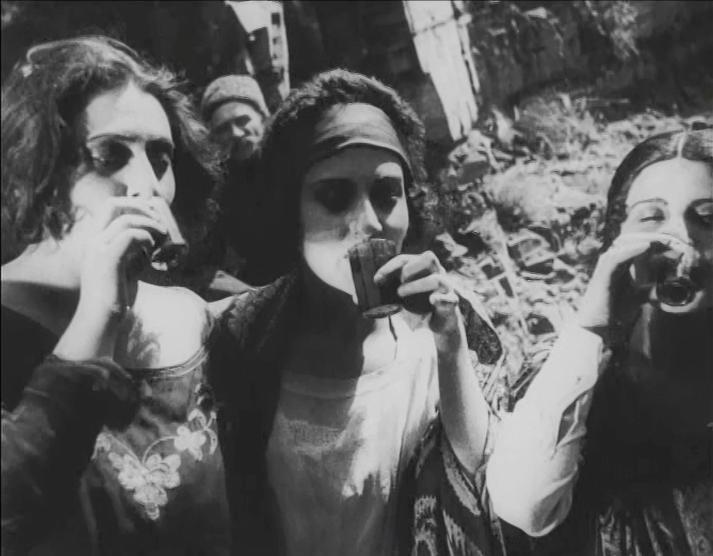
Silent cinema was no stranger to the macabre in the 1920s, with German Expressionism defining much of early horror. Yet, tucked away in Soviet film history lies The Case of the Murder of Tariel Mklavadze (1925), a largely overlooked but deeply atmospheric silent thriller from Georgia, directed by Ivane Perestiani. As the film reaches its centennial, it deserves recognition not only for its eerie storytelling but also for its place in Soviet and Georgian cinematic history.
At its core, The Case of the Murder of Tariel Mklavadze is a tale of obsession and cruelty, unfolding as a psychological horror rather than a supernatural one. The film follows Spiridon Mtsirishvili (Kote Mikaberidze), a schoolteacher, and his wife Despine (Nato Vachnadze), who find themselves ensnared in the twisted desires of a local nobleman, Tariel Mklavadze (Mikheil Kadagidze). The plot is one of creeping dread rather than outright terror, as Tariel and his cohorts engage in a campaign of intimidation and psychological torment, culminating in a series of harrowing encounters.
Unlike many early horror films that relied on elaborate set design and grotesque makeup, The Case of Tariel Mklavadze thrives on mood and tension. Perestiani crafts an unnerving atmosphere using stark lighting contrasts and a slow-burning narrative, heightening the sense of isolation and vulnerability faced by the young couple. While Soviet cinema of the time was largely concerned with revolutionary themes, this film instead explores the power dynamics of class and gender through its horror framework, making it a unique outlier in the era’s cinematic landscape.
One of the film’s greatest strengths lies in its performances, particularly that of Nato Vachnadze. Though she would go on to become one of Soviet Georgia’s most celebrated actresses, The Case of the Murder of Tariel Mklavadze showcases her early talent in a role that demands both fragility and resilience. As Despine, she is at the centre of the film’s tension, her fate seemingly sealed by the whims of men who see her as a prize rather than a person.
Despite its compelling execution, The Case of the Murder of Tariel Mklavadze remains a footnote in horror history, overshadowed by more famous silent-era works like Nosferatu (1922) and The Cabinet of Dr. Caligari (1920). The film’s relative obscurity is partly due to the limited distribution of early Soviet cinema outside the USSR, and it lacks the kind of restoration and revival efforts that have preserved other classics. However, its themes of unchecked power and psychological terror resonate even today, making it a fascinating relic of early horror filmmaking.
One hundred years later, The Case of the Murder of Tariel Mklavadze stands as a testament to the silent era’s ability to unsettle and captivate. With its centenary upon us, it’s a perfect time for film historians and horror aficionados to revisit—or perhaps discover—this lost gem of Georgian cinema.
- Saul Muerte
 Surgeons of Horror