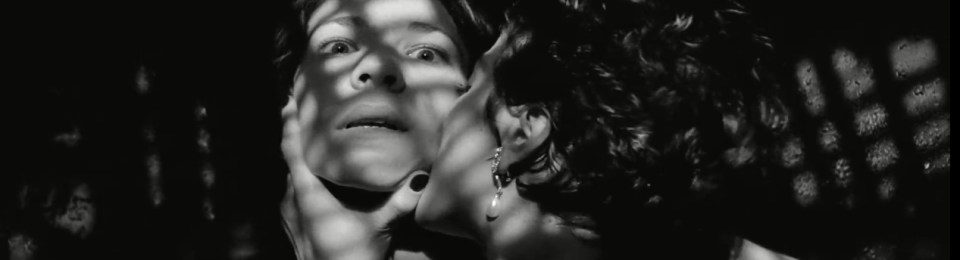
Abel Ferrara’s The Addiction (1995) is a vampire film like no other—more existential crisis than gothic horror, more philosophical discourse than blood-drenched carnage. Shot in stark black and white, it feels like an arthouse fever dream, blending horror with academia, addiction with enlightenment. At 30 years old, the film remains a fascinating, if occasionally pretentious, exploration of power, control, and oppression, anchored by a magnetic performance from Lili Taylor.
Kathleen Conklin (Lili Taylor) is a New York philosophy student whose life takes a sinister turn after she is attacked and bitten by a mysterious woman. As she spirals into an insatiable thirst for blood, she begins to see vampirism as more than just a physical affliction—it becomes a metaphor for oppression, complicity, and the nature of evil itself. Along the way, she encounters a seasoned vampire (Christopher Walken) who warns her of the dangers of surrendering completely to her cravings. But can she resist, or is she doomed to embrace the darkness?
Ferrara, never one for convention, uses vampirism as an allegory for addiction—whether to power, drugs, or ideology. The film’s dialogue is dense with references to philosophers like Nietzsche, Sartre, and Heidegger, which can sometimes feel like a graduate-level seminar more than a horror movie. But if you can push through the intellectual posturing, The Addiction offers a compelling and, at times, harrowing dissection of human nature.
Ferrara’s New York is a city of shadows, the grainy cinematography by Ken Kelsch lending a sense of grimy realism that recalls his earlier works like Bad Lieutenant (1992). The vampires here aren’t glamorous or seductive; they are sickly, ravenous, and desperate, resembling junkies more than supernatural beings.
Lili Taylor delivers a phenomenal performance as Kathleen, bringing both fragility and ferocity to the role. Her transformation from quiet intellectual to cold predator is gradual but chilling, culminating in scenes of nihilistic bloodletting that are as horrifying as they are thought-provoking.
Christopher Walken makes a brief but unforgettable appearance as Peina, a vampire who has learned to suppress his hunger. His cryptic monologues add to the film’s philosophical underpinnings, but his performance, dripping with Walken’s signature charisma, keeps things engaging rather than didactic. The supporting cast—featuring Annabella Sciorra, Edie Falco, Paul Calderon, and a young Michael Imperioli—further enriches the film’s grim world.
Thirty years later, The Addiction remains a divisive film. Some see it as a brilliant deconstruction of horror tropes and a biting commentary on societal power structures; others find it insufferably self-indulgent. But regardless of where one stands, there’s no denying its uniqueness.
Its themes—oppression, complicity, the cycle of violence—are as relevant today as they were in 1995. The film asks difficult questions: Can we resist our darker impulses, or are we all fated to succumb? Are we victims, perpetrators, or both? In true Ferrara fashion, no easy answers are given.
While The Addiction may alienate some with its academic-heavy dialogue and overtly intellectual leanings, those willing to engage with it will find a mesmerising, deeply unsettling film. Lili Taylor’s powerhouse performance, Ferrara’s uncompromising vision, and the film’s stark aesthetic make it a fascinating entry in the vampire canon—one that still bites, 30 years later.
- Saul Muerte
 Surgeons of Horror