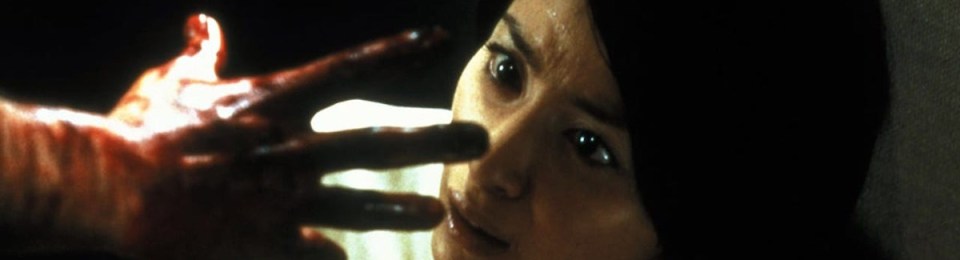
Takashi Shimizu’s Ju-on: The Curse (2000) is not just the beginning of one of Japan’s most iconic horror franchises—it’s the foundation of a modern cinematic legacy that continues to haunt audiences across the globe. Released 25 years ago, this low-budget, direct-to-video feature introduced the world to a terrifying curse, an unrelenting cycle of vengeance that spares no one. While it may not be the most polished entry in the series, Ju-on: The Curse remains a crucial moment in horror history, setting the stage for an enduring and influential franchise.
Ju-on: The Curse emerged as an expansion of two short films Shimizu created for a Japanese anthology series, Katasumi and 4444444444. These short vignettes hinted at the horrors of the Saeki house, but it was this feature-length debut that gave life—or more accurately, un-death—to the stories of Kayako, the vengeful spirit, and her son, Toshio. Shot on a modest budget, the film’s lo-fi aesthetic lends it a raw and unsettling realism, as if viewers are unwittingly peering into a cursed world themselves.
While Ju-on: The Curse may lack the finesse of later entries, it introduced Shimizu’s now-signature fragmented storytelling. The non-linear structure, jumping across time and characters, emphasises the inescapable nature of the curse. Once you step into the Saeki house, your fate is sealed, no matter how far you run or how much time passes.
The film’s limited release might have meant a quiet debut, but word-of-mouth buzz about its chilling atmosphere quickly spread. Shimizu’s unsettling use of silence, eerie sound effects, and the unforgettable imagery of Kayako crawling in jerky movements became instant nightmare fuel. It wasn’t long before Ju-on: The Curse garnered a cult following, propelling Shimizu to rework the concept for a theatrical audience in 2002 with Ju-on: The Grudge.
From there, the franchise expanded rapidly, becoming a cornerstone of J-horror. The success of The Grudge series led to American remakes starring Sarah Michelle Gellar, television adaptations, and even crossover films (Sadako vs. Kayako), cementing the franchise’s place in popular culture.
What makes Ju-on: The Curse so enduring is its universality. The idea of a haunting that clings to its victims and passes from one to the next taps into primal fears about guilt, punishment, and inevitability. Shimizu’s original vision might have been modest in scope, but the franchise it birthed grew into a juggernaut that redefined how audiences perceive Japanese horror.
For all its flaws—like some uneven pacing and an understandably amateurish sheen—Ju-on: The Curse is the blueprint for what followed. It’s a stark reminder that great horror doesn’t require a Hollywood budget, just an idea that worms its way into your subconscious and refuses to let go.
Twenty-five years later, the echoes of the Saeki house continue to reverberate, proving that some curses truly are eternal.
- Saul Muerte
 Surgeons of Horror