Tags
Cassandra Magrath, greg mclean, john jarratt, kestie morassi, mick taylor, Nathan Phillips, Wolf Creek
In 2005, Greg McLean’s Wolf Creek unleashed a chilling new chapter in Australian cinema, a psychological horror that tore through audiences with its unflinching brutality and unsettling realism. Two decades later, the film’s harrowing impact remains undeniable, cementing its place as an iconic piece of modern horror. Though divisive for its slow-burn pacing and visceral violence, Wolf Creek thrives on its darkly warped core and the unforgettable menace of John Jarratt’s performance as the sadistic Mick Taylor.
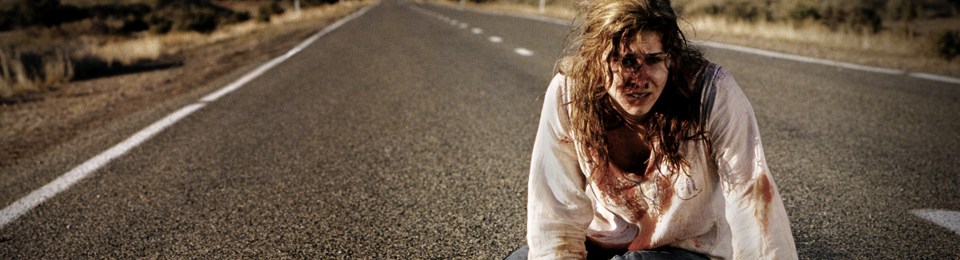
Set against the backdrop of Australia’s desolate outback, Wolf Creek begins with an eerie calm. McLean’s deliberate pacing immerses viewers in the idyllic yet isolating beauty of the terrain, lulling them into a false sense of security as three travelers—Ben (Nathan Phillips), Liz (Cassandra Magrath), and Kristy (Kestie Morassi)—set off on an adventure. It’s not until they cross paths with Mick Taylor, an unassuming yet unhinged local, that the film’s true terror takes shape.
John Jarratt’s portrayal of Mick Taylor is the cornerstone of Wolf Creek’s enduring legacy. Drawing inspiration from real-life Australian crimes, Jarratt transforms Mick into a disturbingly charismatic monster, combining a disarming sense of humour with an undercurrent of sadistic cruelty. His every laugh, leer, and word carries an air of unpredictability, making him one of horror’s most terrifying villains. Jarratt’s chilling performance anchors the film, ensuring Mick Taylor remains a haunting figure in the annals of horror cinema.
Despite criticisms of its slow start, McLean’s direction proves masterful in its escalation of dread. The film’s first act may take its time, but it serves a purpose: establishing the characters’ humanity and grounding the story in an almost documentary-like realism. This measured buildup amplifies the horror when it arrives, plunging the audience into an unrelenting nightmare that feels disturbingly plausible.
Wolf Creek also marked a turning point for Australian cinema, revealing a darker, grittier side of the national identity. Far from the sun-soaked landscapes and laid-back charm often associated with Australia on screen, McLean’s vision is one of isolation, vulnerability, and predatory danger. The vast emptiness of the outback becomes a character in itself, both beautiful and menacing, amplifying the film’s sense of helplessness.
The success of Wolf Creek spawned a sequel, Wolf Creek 2 (2013), and a television series, allowing audiences to dive deeper into Mick Taylor’s twisted world. A long-rumored third installment remains a tantalising prospect, proof of the franchise’s lasting appeal. Though each expansion of the Wolf Creek universe adds layers to its narrative, the original remains unmatched in its raw power and visceral impact.
As Wolf Creek turns 20, its legacy as a defining entry in horror cinema is undeniable. Greg McLean’s audacious storytelling, combined with Jarratt’s terrifying performance, created a film that sticks in the mind. Whether you revisit it for its shocking brutality, its exploration of Australia’s darker underbelly, or its unforgettable villain, one thing is certain: Wolf Creek is as haunting today as it was two decades ago.
- Saul Muerte
 Surgeons of Horror