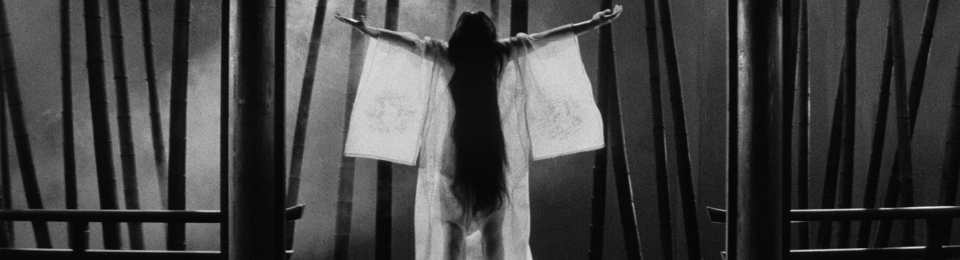
Kaneto Shindō’s Kuroneko (Black Cat in the Bamboo Grove) is a haunting masterpiece of Japanese cinema that blends ghostly folklore, revenge, and heart-wrenching tragedy into a tale as elegant as it is unsettling. Released in 1968, this chilling horror drama unfolds in the Sengoku period, an era rife with war and moral decay, serving as the perfect backdrop for its story of loss, love, and vengeance.
The film begins with a brutal act of violence: a mother and daughter are raped and murdered by marauding samurai, their home consumed by fire. Left in the ashes, their spirits return as onryō—vengeful ghosts—manifesting as black cats that lure unsuspecting samurai to their doom. This chilling setup is a stark indictment of wartime atrocities, as Shindō uses the supernatural as a vehicle to critique human cruelty.
When the local governor learns of the mysterious deaths, he dispatches Gintoki, a fiercely loyal and hotheaded young warrior, to eliminate the ghostly threat. What follows is a beautifully tragic confrontation between Gintoki and the two spirits, who reveal themselves to be the vengeful mother and daughter. Bound by love and duty, Gintoki must face the devastating realisation of his connection to the ghosts, leading to a climactic battle that is as emotionally charged as it is visually stunning.
The cinematography by Kiyomi Kuroda is nothing short of breathtaking. Shindō and Kuroda craft a visual world that feels both otherworldly and deeply rooted in Japanese tradition. The bamboo forest, bathed in soft moonlight, becomes an ethereal stage for the unfolding drama. The interplay of light and shadow creates a dreamlike atmosphere, where every frame is as meticulously composed as a classical painting. The spectral appearances of the women, draped in flowing white robes and gliding across the screen, are hauntingly beautiful, embodying the eerie elegance that defines the film.
At its heart, Kuroneko is a story about love and loss. The bond between the mother and daughter, even in death, adds a poignant layer to the horror. Their revenge is not born of pure malice but of righteous fury against the injustice done to them. The film also explores Gintoki’s torn loyalties as he grapples with his duty to the state and his personal ties to the ghosts. This emotional complexity elevates the film beyond a mere tale of vengeance, making it a deeply human story.
The score by Hikaru Hayashi further enhances the film’s haunting quality, blending traditional Japanese sounds with a sense of otherworldly dread. The music is sparse yet impactful, heightening the tension and underscoring the tragic beauty of the story.
Kuroneko is not just a horror film; it is a meditation on the cyclical nature of violence, the consequences of war, and the indelible scars left on the human soul. It weaves together horror, romance, and social commentary in a way that few films achieve.
Kaneto Shindō’s ability to balance the macabre with the poetic makes Kuroneko a standout work of Japanese cinema. Its evocative storytelling, exceptional cinematography, and emotional depth ensure its place as a timeless classic.
- Saul Muerte
 Surgeons of Horror