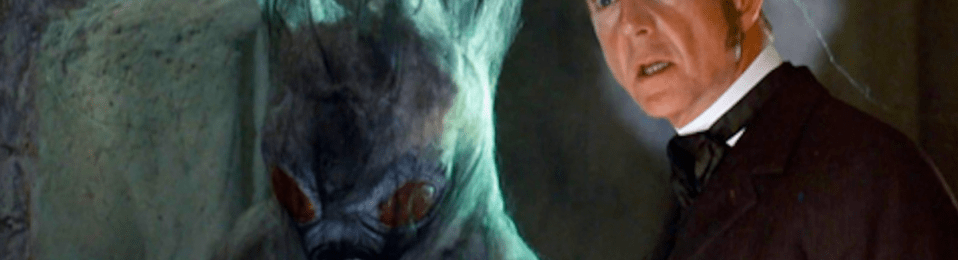
In the golden age of Hammer Horror-inspired cinema, The Blood Beast Terror (1968) dared to stand out with its blend of detective mystery and creature feature antics. Unfortunately, this boldness didn’t translate into cinematic success, resulting in a film that’s more curiosity than classic. Despite its flaws, the movie is buoyed by a stellar central performance from Peter Cushing and a capable supporting cast including Robert Flemyng and Wanda Ventham.
The film’s plot reads like a fever dream of 1960s pulp horror: a series of grisly murders plagues the countryside, each victim drained of blood. Enter Inspector Quennell (Cushing), a sharp-witted detective determined to solve the mystery. The trail leads him to Dr. Mallinger (Flemyng), an entomologist whose secret experiments have birthed a horrifying creature—a human-moth hybrid with a deadly thirst. Mallinger’s enigmatic daughter, Clare (Ventham), further complicates matters as Quennell unravels the twisted truth.
Peter Cushing’s performance as Inspector Quennell is the film’s greatest asset. His trademark gravitas and effortless charm breathe life into the otherwise pedestrian script. Whether interrogating suspects or confronting unspeakable horrors, Cushing elevates every scene with his nuanced delivery and commanding presence. His performance alone makes The Blood Beast Terror worth a watch for fans of vintage horror.
Robert Flemyng provides a suitably sinister turn as Dr. Mallinger, blending arrogance and desperation in his portrayal of a man consumed by hubris. Wanda Ventham, as Clare, delivers an enigmatic performance that hints at the character’s duality, though the script’s limitations leave her with little room to shine. Ventham’s ethereal beauty and restrained menace make her a memorable part of the film, even as the narrative fails to fully explore her potential.
The concept of a giant killer moth might seem ludicrous, but it’s handled with surprising seriousness. The creature effects, while dated, possess a certain charm and showcase the ingenuity of the era’s low-budget filmmaking. The transformation sequences and final confrontation are standout moments, embodying the warped gold that makes this film intriguing despite its shortcomings.
The Prognosis:
The Blood Beast Terror is a peculiar entry in the annals of 1960s horror. While it struggles under the weight of a thin script and an outlandish premise, the performances—particularly Cushing’s—and the audacity of its concept make it a fascinating watch for genre enthusiasts. That said, the film ultimately lacks the polish and cohesion needed to ascend to the ranks of its contemporaries.
The Blood Beast Terror is best appreciated as a quirky relic of its time, a testament to the creativity and ambition of mid-century horror cinema.
- Saul Muerte
 Surgeons of Horror