10 – 1
10. A Quiet Place (2018)
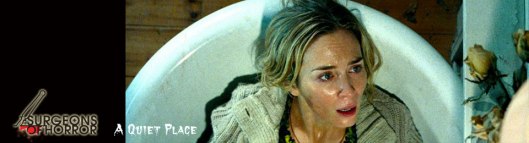
John Krasinski’s A Quiet Place is a revelation in modern horror, a film that uses sound—or the lack thereof—to deliver some of the most nail-biting tension in recent memory. The story unfolds in a post-apocalyptic world where monstrous creatures hunt by sound, forcing a family to live in near-total silence. The narrative is deeply personal, focusing on a family’s struggle to survive and protect each other while navigating grief and hope in a world that has fallen apart. Krasinski’s direction transforms silence from a survival mechanism into a harrowing storytelling tool, forcing viewers to hang on every sound.
Emily Blunt’s performance is a standout, particularly in a sequence involving childbirth that showcases both her character’s and the film’s ability to generate relentless suspense. The familial relationships elevate A Quiet Place beyond a standard creature feature, grounding the horror in universal emotions of love and loss. Krasinski’s portrayal of a father doing everything he can to protect his children resonates deeply, adding layers to the film’s already compelling story.
What makes A Quiet Place truly remarkable is its ability to engage audiences on a primal level. It demands their attention and silence, pulling them into its carefully constructed world. The film is a triumph of minimalist horror, proving that tension doesn’t require elaborate plots or excessive dialogue—just a clever concept executed with precision. Krasinski’s transformation from a comedic actor to a horror auteur is inspiring, leaving us curious about what other surprises he might have up his sleeve.
9. Bone Tomahawk (2015)
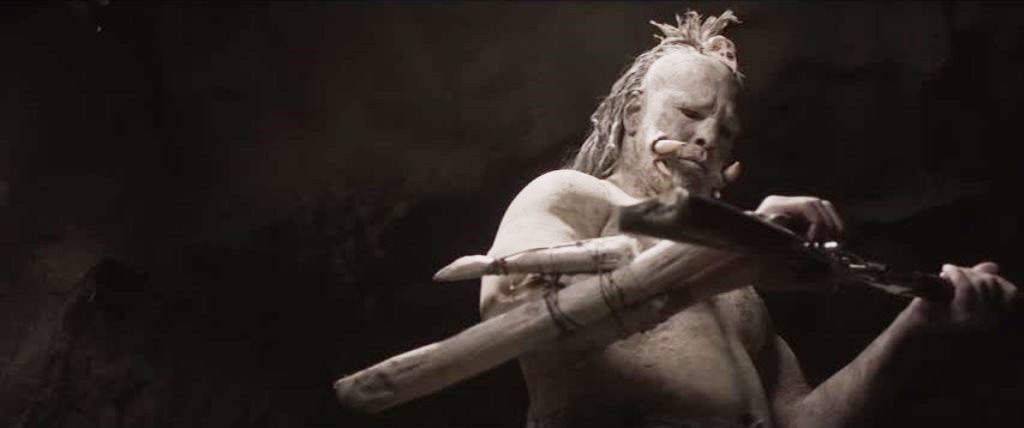
S. Craig Zahler’s Bone Tomahawk defies easy categorization, blending the Western and horror genres into a film that is as thought-provoking as it is harrowing. The story follows a small-town sheriff (Kurt Russell) leading a rescue mission into hostile territory after a group of townsfolk is abducted by a tribe of cave-dwelling cannibals. Zahler’s deliberate pacing gives the film a meditative quality, allowing audiences to bond with its richly drawn characters before plunging them into an abyss of terror.
The cast is exceptional, with Kurt Russell delivering a commanding performance as a grizzled lawman, and Richard Jenkins offering a poignant turn as his loyal but aging deputy. Patrick Wilson and Matthew Fox round out the group with compelling portrayals of men driven by duty and desperation. The film’s restrained first half lulls viewers into a sense of security, emphasizing camaraderie and moral dilemmas, which makes its shocking third act all the more jarring.
When Bone Tomahawk shifts into full horror mode, it does so unapologetically, with some of the most gruesome sequences in modern cinema. The brutality isn’t gratuitous but serves to underscore the savage reality of the world Zahler has created. The film challenges audiences to grapple with themes of survival, morality, and the limits of humanity in the face of inhuman threats. It’s a unique entry in the horror canon, proving that genre hybrids can be as unsettling as they are innovative.
8. Raw (2016)
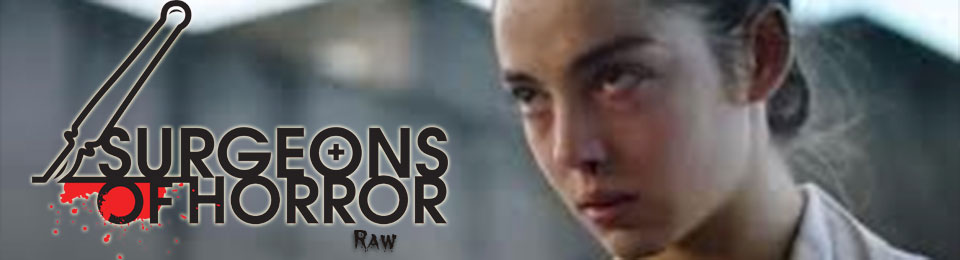
Julia Ducournau’s Raw is a visceral exploration of identity, desire, and transformation, wrapped in the guise of body horror. The film follows Justine (Garance Marillier), a vegetarian veterinary student who develops an insatiable craving for flesh after a hazing ritual. What begins as a subtle coming-of-age story evolves into a grotesque yet beautiful meditation on the complexities of human nature and familial bonds. Ducournau’s direction is fearless, blending shocking imagery with a deeply empathetic narrative.
The relationship between Justine and her older sister, Alexia (Ella Rumpf), is central to the film’s emotional core. Their sibling rivalry, complicated by their shared dark secret, mirrors the duality of love and destruction that defines Raw. Ducournau uses their bond to explore themes of inheritance and transformation, both literal and metaphorical. The film’s stark visuals and pulsating soundtrack amplify its intensity, immersing the audience in Justine’s unsettling journey of self-discovery.
Beyond its shock value, Raw is a deeply introspective film that challenges viewers to confront their own perceptions of normalcy and taboo. It’s a story about growing up, breaking free, and embracing the parts of oneself that society deems unacceptable. Ducournau’s masterful storytelling and Marillier’s haunting performance make Raw an unforgettable cinematic experience—a horror film that transcends its genre to deliver something profoundly human.
7. The Host (2006)
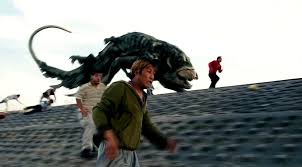
Bong Joon-ho’s The Host is more than a monster movie—it’s a masterful blend of horror, satire, and family drama that redefines the creature-feature genre. The story begins with an environmental disaster caused by human negligence, leading to the birth of a monstrous creature that terrorizes the Han River. The film focuses on the dysfunctional Park family as they band together to rescue their youngest member, who has been abducted by the creature. Bong uses this central narrative to weave in commentary on government incompetence, societal apathy, and environmental responsibility.
The titular creature is a marvel of design, grotesque yet oddly graceful, and its appearances are both thrilling and terrifying. However, what truly sets The Host apart is its focus on the human element. The Park family, led by the bumbling but lovable Gang-du (Song Kang-ho), is a far cry from the typical heroic protagonists of monster movies. Their flaws and resilience make them relatable, anchoring the film’s fantastical elements in a deeply emotional reality.
Bong’s ability to balance tonal shifts—from horror to humor to tragedy—is nothing short of remarkable. The Host’s mix of heart-pounding action and poignant family drama ensures it resonates on multiple levels. It’s a film that entertains while provoking thought, solidifying Bong Joon-ho’s reputation as a filmmaker who defies conventions and elevates every genre he touches.
6. Midsommar (2019)
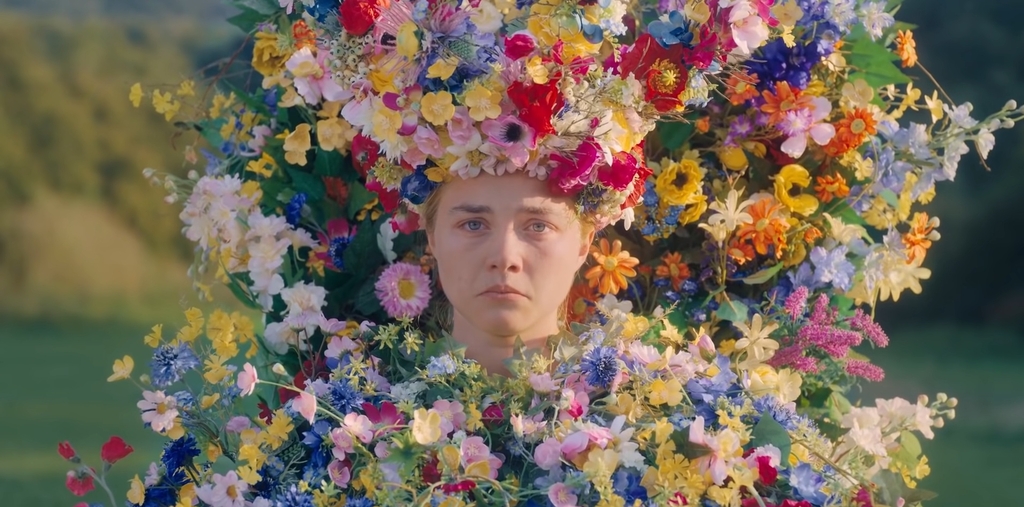
Ari Aster’s Midsommar is a visually stunning and psychologically disturbing exploration of grief, relationships, and cultural alienation. The film follows Dani (Florence Pugh), a young woman reeling from a devastating personal loss, as she accompanies her distant boyfriend Christian (Jack Reynor) and his friends on a trip to a secluded Swedish commune. What begins as a seemingly idyllic cultural retreat quickly devolves into a harrowing descent into ritualistic horror. Aster masterfully juxtaposes the radiant beauty of the setting with the dark undercurrents of the story, creating a uniquely unsettling experience.
Florence Pugh delivers a career-defining performance as Dani, capturing her emotional fragility and gradual transformation with remarkable nuance. Her journey from victimhood to empowerment, albeit through disturbing means, is both tragic and cathartic. The film’s dissection of toxic relationships adds depth to its narrative, with Dani and Christian’s crumbling partnership serving as a metaphor for the broader themes of connection and isolation.
Midsommar stands out for its unorthodox approach to horror, eschewing darkness and jump scares in favor of daylight terror and slow-building dread. The intricate production design, folk-inspired rituals, and meticulous pacing immerse viewers in the eerie world of the Hårga. Aster’s second feature cements his status as a modern horror auteur, proving that terror doesn’t always lurk in the shadows—it can also bloom in the blinding light of midsummer.
5. Train to Busan (2016)

Train to Busan reinvigorates the zombie genre with its heart-pounding action and deeply emotional storytelling. Directed by Yeon Sang-ho, the film unfolds on a high-speed train from Seoul to Busan, where passengers must fight for survival as a zombie outbreak spreads rapidly through South Korea. While the premise may seem familiar, the execution is anything but, blending relentless tension with heartfelt moments that elevate it above standard fare.
At its core, Train to Busan is a story about humanity, focusing on Seok-woo (Gong Yoo), a workaholic father traveling with his estranged daughter, Su-an (Kim Su-an). Their relationship serves as the emotional anchor, and their evolving bond amid the chaos is profoundly moving. The film also introduces a memorable ensemble of characters, from a selfless father-to-be (Ma Dong-seok) to a pair of elderly sisters whose loyalty transcends the apocalypse. Each adds depth and texture to the story, making the stakes feel personal.
Yeon Sang-ho’s direction ensures that the film is both a thrilling spectacle and a poignant exploration of sacrifice, heroism, and societal flaws. The confined setting of the train amplifies the tension, while the expertly choreographed action sequences keep audiences on edge. Train to Busan isn’t just one of the best zombie films of the 21st century—it’s a testament to the power of genre cinema to evoke fear, tears, and triumph all at once.
4. Shaun of the Dead (2004)
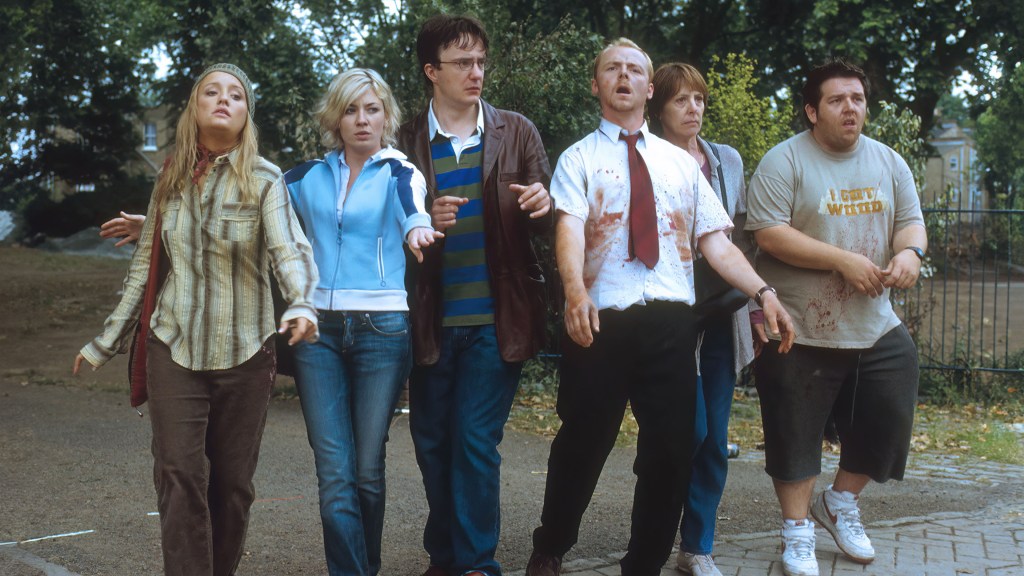
Edgar Wright’s Shaun of the Dead is a brilliant fusion of comedy and horror, affectionately dubbed a “rom-zom-com.” The film follows Shaun (Simon Pegg), a hapless everyman navigating a zombie apocalypse while attempting to win back his ex-girlfriend Liz (Kate Ashfield) and reconcile with his mother. Wright’s razor-sharp direction and Pegg’s witty screenplay, co-written with Nick Frost, breathe new life into the zombie genre, blending laughs with genuine scares and heartfelt character moments.
The film’s strength lies in its characters and their relationships. Shaun’s bromance with his slacker best friend, Ed (Nick Frost), provides endless comedic moments, but it also adds emotional weight as their dynamic shifts throughout the story. Meanwhile, the strained relationships with Liz and his stepfather (Bill Nighy) serve as a backdrop for Shaun’s reluctant journey toward maturity. These elements ensure the film is as much about personal growth as it is about survival.
Wright’s signature visual style, characterized by kinetic editing and clever foreshadowing, enhances the film’s humor and tension. From its iconic use of Queen’s “Don’t Stop Me Now” during a zombie beatdown to its biting commentary on societal apathy, Shaun of the Dead strikes a perfect balance between parody and homage. It remains a genre-defining masterpiece that showcases the versatility of horror-comedy and its ability to entertain, scare, and touch audiences in equal measure.
3. The Lighthouse (2019)
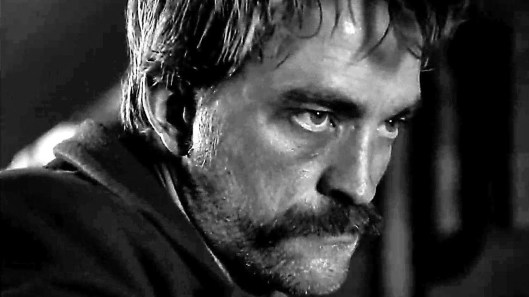
Robert Eggers’ The Lighthouse is an atmospheric descent into madness, a tale of isolation and obsession that feels both timeless and uniquely contemporary. Shot in stark black-and-white and framed in a nearly square aspect ratio, the film immerses viewers in the claustrophobic world of two lighthouse keepers, played with ferocious intensity by Willem Dafoe and Robert Pattinson. As they battle the elements, each other, and their own sanity, Eggers crafts a narrative that is as enigmatic as it is mesmerizing.
Dafoe and Pattinson deliver career-best performances, with Dafoe’s crusty, sea-faring monologues and Pattinson’s simmering desperation providing the film’s dramatic core. Their dynamic oscillates between camaraderie and hostility, creating a tension that is both deeply unsettling and darkly comedic. The film’s dialogue, rooted in 19th-century vernacular, adds to its authenticity, while its mythological undertones invite endless interpretation.
Eggers’ meticulous attention to detail extends to every aspect of the production, from the haunting sound design to the evocative use of light and shadow. The result is a film that feels like a fever dream, blending psychological horror with elements of folklore and existential dread. The Lighthouse is not for everyone, but for those willing to dive into its depths, it offers an unforgettable cinematic experience that lingers long after the final frame.
2. Get Out (2017)
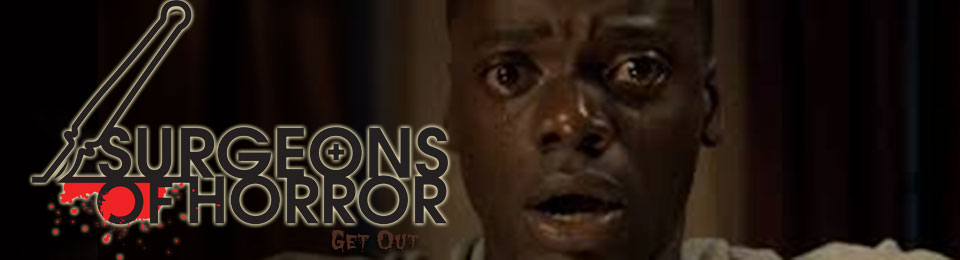
Jordan Peele’s Get Out is a groundbreaking exploration of racial tension and social horror, wrapped in the guise of a psychological thriller. The story follows Chris (Daniel Kaluuya), a young Black man visiting the family of his white girlfriend, Rose (Allison Williams). What begins as a seemingly awkward weekend soon reveals a sinister conspiracy that forces Chris to fight for his life. Peele’s razor-sharp script weaves biting satire with genuine terror, creating a film that is as thought-provoking as it is unsettling.
Daniel Kaluuya’s performance anchors the film, capturing Chris’s unease and resilience as he navigates an increasingly hostile environment. The supporting cast, particularly Allison Williams and Catherine Keener, deliver chilling performances that add layers to the narrative. Peele’s use of visual motifs, such as the sunken place, underscores the film’s exploration of systemic oppression and the erasure of Black identity.
Get Out is more than a horror film—it’s a cultural touchstone that sparked conversations about representation and racism in America. Its success cemented Peele as one of the most exciting voices in modern cinema, and its influence can be seen in the wave of socially conscious horror films that followed. By blending horror with incisive commentary, Get Out redefined what the genre could achieve, making it an essential entry in the canon of 21st-century cinema.
Get Out: 6 hidden moments that lured us under its hypnotic spell
1. Let the Right One In (2008)

Tomas Alfredson’s Let the Right One In is a hauntingly beautiful tale of love, loneliness, and the monstrous within us all. Set in the snowy suburbs of 1980s Sweden, the film tells the story of Oskar (Kåre Hedebrant), a bullied boy who befriends Eli (Lina Leandersson), a mysterious girl with a dark secret. Their relationship blossoms against a backdrop of violence and despair, creating a poignant contrast between innocence and horror.
Eli’s vampiric nature adds a chilling layer to the story, but the film is less about bloodlust and more about the connection between two outcasts. Alfredson’s direction emphasizes the quiet moments—the tentative exchanges, the shared silences—that make their bond feel authentic and deeply moving. The performances of Hedebrant and Leandersson are extraordinary, capturing the vulnerability and resilience of their characters.
Cinematographer Hoyte van Hoytema’s stark visuals and Johan Söderqvist’s ethereal score create an atmosphere that is both melancholic and otherworldly. Let the Right One In transcends the vampire genre, delivering a story that is as tender as it is terrifying. It’s a masterpiece of modern horror, a film that lingers in the mind and heart long after its chilling final scene.
Closing Thoughts:
The 21st century has seen an evolution in the horror genre that defies its often-dismissed reputation as mere entertainment. From psychological dread to blood-soaked nightmares, these films represent a golden age of creativity, where directors are unafraid to challenge conventions and elevate horror to an art form. Each of the top ten entries demonstrates the genre’s versatility, pushing boundaries while exploring profound themes like grief, identity, and societal anxieties.
What makes these films so impactful is their ability to resonate on a deeply human level. Whether it’s the heartbreaking struggle for connection in Let the Right One In, the biting social commentary of Get Out, or the raw emotional unraveling in Midsommar, these movies prove that horror is not just about scares but also about what lingers beneath the surface—our fears, desires, and vulnerabilities.
As horror continues to evolve, these films serve as a testament to the genre’s enduring power and creativity. They have redefined the landscape, proving that horror is more than a niche—it’s a mirror to the human condition, capable of both terrifying and inspiring audiences. This list celebrates not just the scares but the stories, performances, and visionary filmmaking that have defined horror in the 21st century so far. And if these ten films are any indication, the future of the genre is both bright and deliciously dark.
- Saul Muerte
 Surgeons of Horror
Pingback: Top 100 Horror Films of the 21st Century… so far pt 9 | Surgeons of Horror
Pingback: Top 100 Horror Films of the 21st Century… so far | Surgeons of Horror