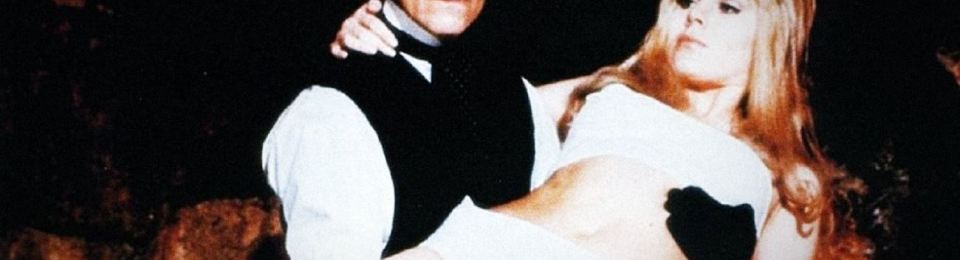
By its fourth entry in Hammer’s Frankenstein saga, Frankenstein Created Woman veered into uncharted thematic territory, exploring the transference of the soul rather than focusing solely on the reconstruction of flesh. The film’s roots trace back to an abandoned concept for the Tales of Frankenstein television series, which was later resurrected as a collaboration between Hammer and Twentieth Century Fox. Loosely inspired by Roger Vadim’s And God Created Woman, the feature delved into theological and philosophical dimensions, examining identity, morality, and the repercussions of manipulating the human essence. This ambitious narrative shift elevated it among Hammer’s catalog and gained recognition from cinephiles such as Martin Scorsese.
Central to the film’s success is Peter Cushing’s commanding reprisal of Baron Frankenstein. Cushing’s nuanced performance lends gravitas to the morally ambiguous doctor, whose unrelenting pursuit of scientific discovery transcends ethical boundaries. Opposite Cushing is Susan Denberg as Christina, a woman resurrected with a fractured identity. The tragic duality of Christina and her lover Hans, whose soul is embedded within her, provides a poignant underpinning to the grotesque premise. Denberg, a former Playboy Playmate immersed in the vibrant “It” crowd of the 1960s, including Roman Polanski, brought an uncanny mix of fragility and menace to her role. To bolster the film’s appeal, she was featured in a high-profile publicity campaign, though her career in film was short-lived. With its innovative focus on the isolation of the soul and a revenge-driven narrative, Frankenstein Created Woman became a bold and emotionally charged addition to the Hammer canon.
- Saul Muerte
 Surgeons of Horror
Pingback: The Mummy’s Shroud (1967): A Cursed Shroud, a Creature’s Wrath, and a Studio’s Farewell | Surgeons of Horror