Tags
arnold schwarzenegger, james cameron, lance henriksson, linda hamilton, michael biehn, sci-fi, sci-fi horror, Sci-Fi Movies, Terminator
In 1984, James Cameron, a relatively unknown director at the time, unleashed The Terminator upon the world—a low-budget sci-fi action thriller that would ultimately redefine both genres and launch one of the most enduring franchises in film history. As we celebrate the film’s 40th anniversary, its legacy looms larger than ever, marking it as a pivotal point in both filmmaking and pop culture.
A Vision Born of Dreams (Literally)
It’s impossible to discuss The Terminator without mentioning Cameron’s origins of the story—a fever dream he had during the production of Piranha II: The Spawning. The haunting image of a skeletal, humanoid machine emerging from flames became the foundation for a story that, at its heart, tapped into deep fears about technology and the human condition. Cameron’s background in visual effects also allowed him to conceive a film that would push the limits of practical effects at the time, despite its modest $6.4 million budget.
Cameron’s relentless drive to make The Terminator was evident in the casting choices, the painstaking attention to detail in the special effects, and the world-building that would expand well beyond this film. He worked closely with Gale Anne Hurd, his producing partner and eventual wife, to secure the rights and get the project off the ground. Together, they were not just creating a movie—they were building a mythology.
Schwarzenegger: From Villain to Icon
At the time of its release, The Terminator offered a breakout role for Arnold Schwarzenegger, who had only recently transitioned into mainstream cinema from bodybuilding. Originally considered for the role of Kyle Reese, it was Schwarzenegger’s imposing physical presence that made him perfect for the titular Terminator—a relentless, emotionless killing machine sent from the future to eliminate Sarah Connor.
Schwarzenegger’s portrayal of the T-800 cyborg became iconic not just for his size, but for his chilling detachment, minimal dialogue, and robotic precision. Phrases like “I’ll be back” and “Hasta la vista, baby” became ingrained in pop culture, although it’s easy to forget that The Terminator wasn’t yet a blockbuster upon release. It was only in hindsight, as The Terminator built momentum through word of mouth, home video, and its eventual 1991 sequel Terminator 2: Judgment Day, that Schwarzenegger’s performance became synonymous with the action genre itself.
A Sci-Fi Noir at Heart
The atmosphere of The Terminator is a perfect blend of sci-fi and noir, with its rain-soaked streets, cold urban environments, and dark alleyways. Set against the backdrop of a dystopian future, Cameron crafted a world where machines had risen against their human creators, but he also grounded the narrative in present-day Los Angeles, giving the film a gritty, grounded feel. The blending of these two worlds—dystopian future and present-day urban decay—provided a foreboding sense of inevitability that makes the film feel eerily relevant even today.
Brad Fiedel’s memorable score, with its mechanical, pulse-like rhythm, became as integral to the film’s atmosphere as its visuals. The iconic “Terminator theme” conveyed both a sense of impending doom and a cold, mechanical world that was indifferent to human survival. This helped solidify The Terminator as more than just an action-packed film—it was a mood piece that explored deeper philosophical questions about fate, technology, and survival.
Sarah Connor: A New Kind of Heroine
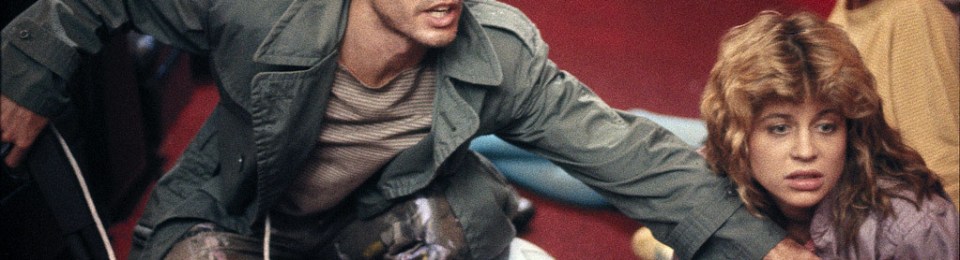
While The Terminator is often remembered for Schwarzenegger’s chilling presence, it’s Linda Hamilton’s Sarah Connor who grounds the film emotionally. When we first meet her, she’s an ordinary woman, unaware of her pivotal role in the future of humanity. Her arc from a vulnerable target to a resilient, determined fighter is one of the film’s most compelling elements.
Sarah Connor represented a shift in how women were portrayed in action films—no longer just damsels in distress, but central characters with agency and strength. This was a precursor to the much more hardened, militarized version of Sarah Connor seen in Terminator 2, but it was in The Terminator that the seeds were sown for her evolution into one of cinema’s most iconic heroines.
Michael Biehn’s Kyle Reese: The Unsung Hero
At the heart of the film’s emotional core is Michael Biehn’s performance as Kyle Reese, the soldier sent back in time to protect Sarah Connor. Biehn brings a vulnerability to the role that contrasts with Schwarzenegger’s cold, mechanical villainy, making Reese not just an action hero but a tragic figure. His haunted portrayal of a man from a war-torn future who has little left to lose added gravitas to the film. Reese’s desperate commitment to saving Sarah and the future of humanity adds an emotional weight to the action, grounding the story in a sense of real human stakes. Biehn would later reunite with Cameron in Aliens (1986), where he delivered another memorable performance as Corporal Hicks, cementing his place as one of Cameron’s go-to actors for complex, layered heroes.
Special Effects That Stood the Test of Time
For a film made on such a tight budget, The Terminator showcased groundbreaking practical effects and makeup work, particularly Stan Winston’s animatronic work on the T-800’s skeletal form. The combination of stop-motion animation, practical models, and early animatronics allowed Cameron to realise his terrifying vision of the machine within.
The relentless, unstoppable nature of the Terminator was embodied in the effects, particularly during the climactic scene where the T-800, stripped of its human skin, chases Sarah and Kyle in full skeletal form. While today’s audiences may be used to seamless CGI, the practical effects of The Terminator are still impressive, especially given the constraints of the time.
Themes of Fate, Technology, and Survival
At the core of The Terminator is a meditation on fate. The film presents the terrifying notion that certain events are predestined—whether it’s the rise of machines or Sarah Connor’s role in the survival of the human race. This theme of inevitability resonates throughout the series, but it’s perhaps most impactful in the original, where there’s a palpable sense of helplessness in the face of a seemingly unstoppable future.
Cameron also tapped into growing anxieties about technology. The idea of machines becoming sentient, of artificial intelligence surpassing human control, was still largely science fiction in 1984, but The Terminator presented a vision of what could happen if technology ran amok. This cautionary tale feels even more relevant in today’s age of advanced AI and automation.
The Horror at the Heart of The Terminator
While The Terminator is often categorised as a sci-fi action film, it’s impossible to overlook its deep horror roots. Cameron masterfully weaves suspense and dread throughout the film, presenting the T-800 as a near-unstoppable force reminiscent of classic horror villains like Michael Myers or Jason Voorhees. The relentless pursuit of Sarah Connor gives the film the tension and atmosphere of a slasher, with the Terminator stalking its prey with terrifying precision. Scenes like the police station massacre are not just action set pieces but moments of sheer terror, underscored by the unstoppable, mechanical nature of the T-800. This fusion of horror with science fiction gave The Terminator a distinct edge, setting it apart from other films of the era.
A Lasting Legacy
As we look back 40 years later, it’s clear that The Terminator wasn’t just a genre-defining film—it was the foundation for one of the most successful and influential franchises in cinema history. While the Terminator franchise has had its ups and downs over the years, with numerous sequels, reboots, and TV spinoffs, the original film remains a singular achievement. It captured lightning in a bottle, with its blend of high-concept science fiction, nail-biting action, and surprisingly heartfelt storytelling.
Moreover, The Terminator solidified James Cameron as one of the most visionary directors of his time. He would go on to create other genre-defining films, including Aliens, Titanic, and Avatar, but The Terminator was the launching pad for his meteoric rise.
Conclusion: A Timeless Machine
As we celebrate the 40th anniversary of The Terminator, it’s worth reflecting on how this film, originally conceived as a low-budget B-movie, became a cultural touchstone that continues to influence filmmakers and audiences alike. Its themes of fate, survival, and the dangers of unchecked technological advancement are as timely today as they were in 1984. And much like the unstoppable machine at the film’s core, The Terminator’s legacy is destined to endure for decades to come.
- Saul Muerte
 Surgeons of Horror