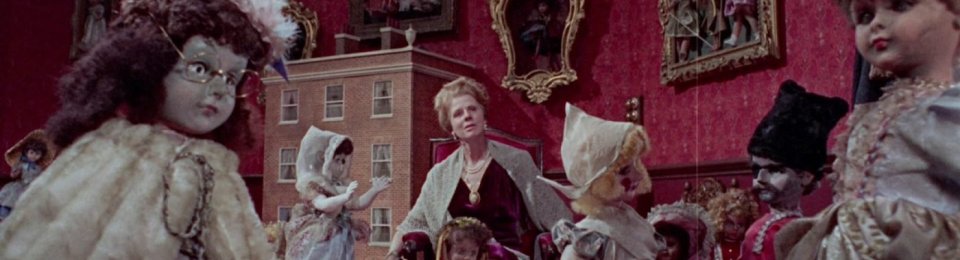
Freddie Francis, the esteemed British cinematographer and director, made a notable return to the horror genre in 1966 with The Psychopath. Known for his impeccable visual storytelling, Francis elevates this otherwise standard thriller into something more atmospheric and unnerving. While it may not stand as a high point in the history of 1960s horror, the film benefits from Francis’ distinctive eye and strong performances from its cast, making it a memorable entry in the decade’s wave of psychological horror.
The plot centers around a series of mysterious murders, with each victim found near a doll resembling them. The link to a tragic past event involving a deceased war criminal adds a layer of intrigue as Inspector Holloway (Patrick Wymark) dives into the investigation. But the heart of The Psychopath is not just its narrative—it’s how Francis builds tension through his chilling visual style, bringing a rich, almost surreal atmosphere to an otherwise straightforward murder mystery.
Francis’ visual expertise shines throughout the film, particularly in the use of shadows and lighting to create an air of claustrophobia and tension. The way he frames key moments—particularly the scenes involving the dolls—lends an eerie, almost Gothic quality to the film, reminiscent of his earlier work with Hammer Films. His background as a cinematographer is especially evident in the beautifully composed shots and meticulous attention to detail in creating the unsettling mood.
The performances are also strong, with Patrick Wymark delivering a solid turn as the determined inspector. Margaret Johnston, as the unsettling Mrs. Von Sturm, is wonderfully creepy, bringing an icy presence to the screen that lingers long after the film ends. John Standing and Alexander Knox round out the cast, delivering performances that serve the tension well, even as the plot begins to wobble in places.
However, The Psychopath suffers from a script that doesn’t quite match the strength of its direction and performances. The story unfolds predictably, and while the mystery has moments of tension, it never quite breaks free from the genre tropes of the time. The pacing is uneven, and the film’s final act, while chilling, feels slightly rushed.
Despite these shortcomings, Freddie Francis’ work behind the camera is what truly gives The Psychopath its lasting impact. His ability to craft mood and tension through the lens is unparalleled, making even the most ordinary moments bristle with a quiet menace. In this way, the film rises above its limitations, showcasing once again Francis’ remarkable talent for transforming the mundane into the macabre.
While not the most innovative or terrifying film of the decade, The Psychopath remains a worthwhile watch, particularly for fans of Freddie Francis’ distinct visual style and those who appreciate the more atmospheric side of 1960s horror. It stands as a reminder of how style and atmosphere can elevate even the simplest of stories.
- Saul Muerte
 Surgeons of Horror