Tags
1960s horror, 1960s retrospective, barbara steele, ennio morricone, Italian Cinema, italian gothic horror, italian horror, mario caiano, paul muller
Nightmare Castle (Amanti d’oltretomba), released in 1965, is a curious entry in the Italian Gothic horror canon. Directed by Mario Caiano, the film is best remembered for its haunting atmosphere and the hypnotic performance of Barbara Steele, a cult horror icon. However, despite these strengths, the film struggles to rise above its predictable narrative and uneven pacing, leaving it as a middling affair that teeters between camp and genuine menace.
At its heart, Nightmare Castle is a classic tale of revenge from beyond the grave, a trope that was well-worn even by the mid-1960s. The story centers on the sadistic Dr. Stephen Arrowsmith (Paul Muller), who, upon discovering his wife Muriel (Barbara Steele) is having an affair with the gardener, exacts a brutal form of vengeance by torturing them both to death. But as is tradition in Gothic horror, death is only the beginning. Muriel’s ghost returns to torment the living, while her heartless husband schemes to inherit her fortune by marrying her look-alike stepsister, Jenny (also played by Steele).
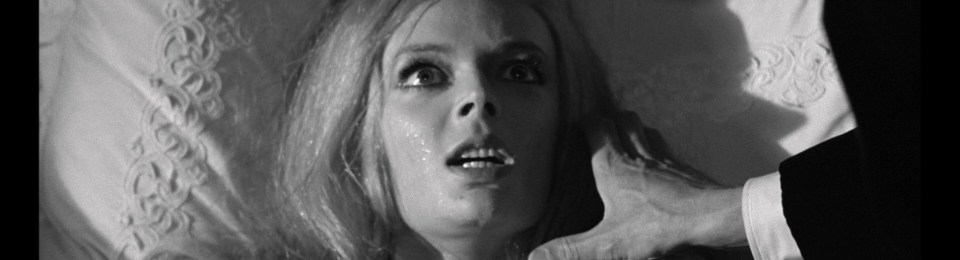
What Nightmare Castle excels at is atmosphere. The film is drenched in Gothic style, with its gloomy castle setting, cobwebbed corridors, and macabre experiments that feel right at home in the genre. Caiano’s direction is deliberate, crafting a slow-burn tension through shadowy cinematography and eerie set pieces. The film’s black-and-white visuals are striking, often elevating otherwise flat moments into something more sinister. Combined with Ennio Morricone’s haunting score, these elements create a mood of dread that permeates throughout the film, even when the plot falters.
The real standout of Nightmare Castle is Barbara Steele, whose dual role as Muriel and Jenny showcases her range. Steele, known for her piercing gaze and ethereal presence, is magnetic on screen, embodying both the vengeful ghost and the innocent victim with equal conviction. Her performance is the film’s emotional core, and without her, the movie would likely have faded into obscurity. There’s something captivating about Steele’s ability to straddle the line between fragility and fury, making her a perfect fit for the Gothic horror aesthetic.
Unfortunately, the rest of the film doesn’t quite live up to Steele’s performance. The plot is predictable, following well-worn Gothic horror beats with little innovation. Dr. Arrowsmith’s evil deeds are cartoonish at times, and while Muller gives a decent performance as the unhinged scientist, his character lacks depth or nuance. The pacing is also uneven, with stretches of the film dragging as it rehashes familiar tropes, particularly in the second act, where it loses momentum before gearing up for the supernatural climax.
What prevents Nightmare Castle from being more than a middling affair is its reliance on Gothic clichés without adding much substance to them. The narrative is thin, and while the film is visually engaging, it rarely delves into the psychological terror that could have elevated it. The film borrows heavily from earlier, more successful Gothic horrors, such as Mario Bava’s Black Sunday (1960), which also starred Steele. However, Nightmare Castle lacks the same level of narrative intricacy or directorial flair that made Black Sunday a classic.
Despite these flaws, Nightmare Castle has gained a certain charm over time, largely due to its Gothic visuals and Steele’s performance. It embodies many of the hallmarks of mid-century Italian horror, with its moody, dreamlike atmosphere and grotesque elements. The film’s themes of betrayal, madness, and revenge are all here, though they’re presented in a somewhat surface-level way. Still, there’s a nostalgic appeal to the film for fans of the genre, who may appreciate its visual style and the presence of Steele, even if the story itself feels formulaic.
The Prognosis:
Nightmare Castle is a film that Gothic horror enthusiasts will likely enjoy for its atmosphere and Steele’s hypnotic presence. However, its predictable plot, uneven pacing, and reliance on familiar tropes prevent it from achieving greatness. While it’s not a bad film, it’s also not a particularly memorable one, leaving it as a middling entry in the annals of 1960s Italian horror cinema. For those who love the genre, it’s worth a watch—but don’t expect it to haunt your nightmares.
- Saul Muerte
 Surgeons of Horror