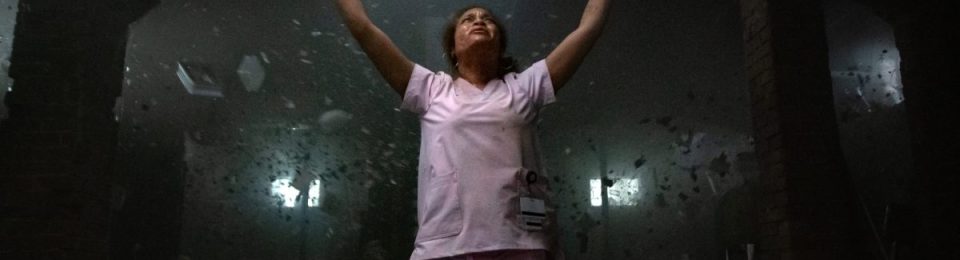
The Deliverance, based on a true story, aims to delve deep into the emotional and personal struggles of its characters, particularly those portrayed by Glenn Close and Andra Day. At first glance, it promises a gripping, introspective journey, focusing on the kind of slow-burn, character-driven drama that pulls you in. However, while the film does dedicate ample time to fleshing out its protagonists, it unfortunately stumbles by offering little else to elevate the overall experience.
The film takes its time to build up its central characters, Close and Day in particular, giving the audience a peek into their inner worlds and traumas. Their performances are solid, with Close bringing her seasoned gravitas and Day delivering a commendable portrayal of emotional depth. This focus on character development is understandable, considering it’s a true story, and the filmmakers clearly want us to empathise with their journey. The problem, however, is that the film seems overly invested in this process to the detriment of its narrative pacing and structure.
Once we move past the extensive character-building, what’s left is a plot that feels like it’s on autopilot. Instead of diving into new, thought-provoking territory, The Deliverance resorts to formulaic tropes that have been recycled countless times before. The tension builds, as expected, but there’s an unmistakable feeling that you’ve seen it all before in other dramas of its kind—films from yesteryear that The Deliverance borrows from without adding anything fresh to the mix.
The film’s reliance on tried and tested formulas creates a sense of predictability, leaving few surprises for the audience. Even moments that should hit hard emotionally feel muted because the narrative follows such a familiar path. What starts as an intriguing, personal story ultimately loses momentum, weighed down by clichés and conventional plot devices that strip the film of its potential impact.
The Prognosis:
Despite the strong performances and a promising setup, The Deliverance falls short in its attempt to be more than the sum of its parts. Its commitment to character development is admirable but comes at the cost of the film’s overall engagement, leaving the audience with a story that feels hollow beneath the surface.
- Saul Muerte
 Surgeons of Horror