Tags
1960s horror, 1960s retrospective, asian cinema, asian horror, korean cinema, korean horror, lee yong-min, salinma
Released in 1965, A Bloodthirsty Killer (also known as Salinma) is one of the earlier horror films to emerge from South Korea, giving a chilling glimpse into the cultural and supernatural fears of the time. Directed by Lee Yong-min, the film is often celebrated for blending traditional Korean ghost stories with the aesthetic influence of Western horror cinema. While it does have moments of eerie tension and a narrative steeped in tragic revenge, it doesn’t fully hit the mark, leaving it as a film that’s appreciated for its ambition but limited in its overall execution.
The plot centres around a vengeful spirit that haunts a noble household after a dark secret lead to the unjust death of a woman. This woman’s spirit returns to wreak havoc, targeting her former family with a relentless thirst for revenge. Classic themes of guilt, betrayal, and supernatural retribution dominate the storyline, familiar territory for anyone versed in both Korean and broader Asian ghost tales. Yet the film does manage to inject its own unique flavour into this well-worn trope by grounding the supernatural horror within a distinctly Korean cultural framework.
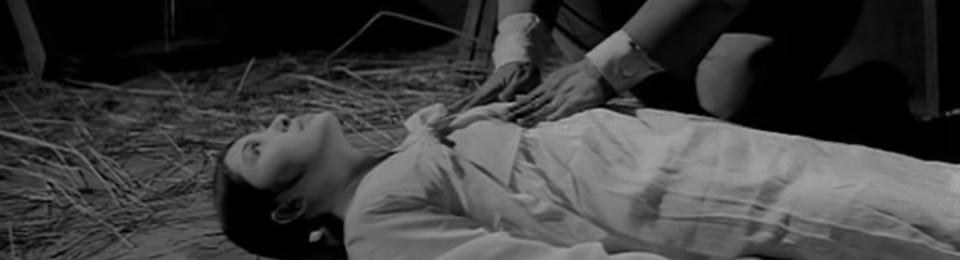
Where A Bloodthirsty Killer excels is in its eerie atmosphere. Lee Yong-min’s direction makes effective use of shadowy, candle-lit interiors and wide, oppressive landscapes to create a sense of dread. The film’s slower pacing is deliberate, allowing the tension to build gradually as the ghost’s presence becomes more threatening. There’s a sense that the environment itself is as haunted as the characters, which adds to the film’s unsettling quality. The visual style is heavily influenced by Japanese ghost stories (such as Kwaidan from 1964), with ghostly apparitions portrayed in eerie, flowing robes and haunting stares that stick with the viewer.
While the visual style and mood of the film are solid, the story struggles with pacing issues. The film’s methodical approach occasionally veers into sluggish territory, and the middle act can feel repetitive, with scenes of the ghost tormenting her victims offering little variation. As a result, the tension sometimes flattens when it should be escalating. The ghostly set-pieces, while well-executed, never quite reach the chilling heights of its Japanese counterparts or the Western Gothic influences it draws from. The film’s climax, though satisfying in concept, lacks the sharp impact that could have made this a truly unforgettable horror piece.
The performances in A Bloodthirsty Killer are a mixed bag. While the actors manage to convey the familial tension and rising fear, the character development leaves something to be desired. The protagonists’ emotional arcs feel underdeveloped, leaving little room for the audience to fully invest in their fates. The ghost herself, however, is compelling, with her tragic backstory giving her a sense of pathos that makes her more than just a typical vengeful spirit. It’s this emotional complexity that gives the film some depth, even if the execution is uneven.
Another notable aspect is how the film subtly touches on class dynamics and family honor. Much of the horror stems from societal pressures and the consequences of moral failings. The ghost’s return isn’t just about revenge—it’s a manifestation of the guilt and shame the family has buried. This gives the film a deeper thematic layer that resonates beyond its surface-level scares, particularly in the context of mid-century Korea, where traditional values clashed with modernising forces.
However, despite these interesting themes, the film never quite transcends its limitations. The lack of a more dynamic plot or stronger character development keeps A Bloodthirsty Killer from rising to the ranks of classic horror. For a film that runs just under 90 minutes, it can feel much longer, a testament to the fact that it’s more style than substance.
In the context of Korean cinema, A Bloodthirsty Killer holds significance as one of the early pioneers of the horror genre. It paved the way for future South Korean horror films, many of which would draw on similar themes of supernatural revenge and family guilt. While the film may not be a masterpiece, it’s an intriguing piece of horror history, a stepping stone toward the complex and more polished Korean horror cinema that would follow in the decades to come.
The Prognosis:
A Bloodthirsty Killer deserves recognition for its ambition and its eerie, atmospheric visuals, but its slow pacing, thin character development, and somewhat repetitive storytelling hold it back from being a true standout. For fans of early Asian horror or those interested in the evolution of Korean cinema, it’s worth a watch, but don’t expect it to sink its teeth in too deeply.
- Saul Muerte
 Surgeons of Horror