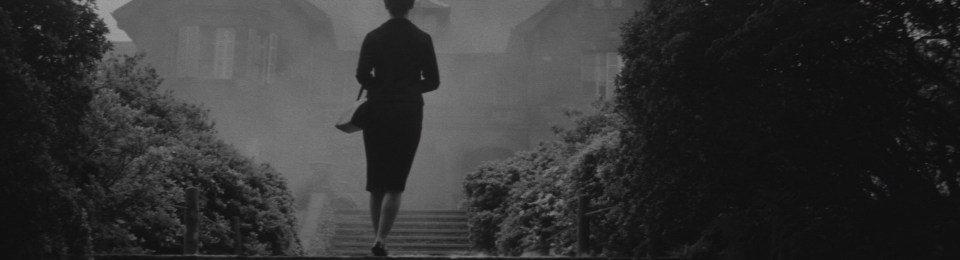
Hajime Satô’s House of Terrors (Kaibyô Noroi no Yakata) is an intriguing entry into the haunted house genre, offering a distinctive Japanese take on the themes explored in Robert Wise’s The Haunting (1963). While it doesn’t quite reach the heights of its inspiration, House of Terrors manages to deliver an eerie, atmospheric experience that will appeal to fans of slow-burn horror.
The film follows a grieving widow who inherits a secluded mansion after her husband’s mysterious death. Accompanied by her maid, she soon discovers that the mansion harbours vengeful spirits, including that of her late husband. This setup, while familiar, is given a fresh twist through the lens of Japanese folklore and cultural nuances, which add layers of intrigue to the unfolding mystery.
One of the film’s strongest aspects is its use of atmosphere. Satô skillfully crafts a sense of dread, utilising the mansion’s shadowy corridors and haunting silence to build tension. The cinematography, with its unsettling angles and effective use of light and shadow, is clearly influenced by The Haunting. However, House of Terrors injects its own flavor, with a more surreal and dreamlike quality that distinguishes it from its Western counterparts.
The pacing, while deliberately slow, serves to heighten the sense of unease. House of Terrors takes its time to unravel its story, allowing the viewer to sink into the eerie world it creates. While this approach might test the patience of some viewers, it also rewards those who appreciate a more measured build-up. The climax, though not as explosive as one might hope, is still satisfying in its own way, offering a resolution that is both haunting and thought-provoking.
The performances are solid, if not particularly memorable. The cast does a commendable job with the material, especially given the film’s focus on atmosphere over character development. The widow’s descent into fear and paranoia is portrayed with subtlety, and while the characters might not be as fully fleshed out as one would like, they serve their purpose within the narrative.
What sets House of Terrors apart is its unique blend of Western and Eastern horror elements. The film’s ghostly apparitions and cursed mansion are classic horror tropes, but the way Satô infuses them with Japanese cultural motifs and folklore gives the film a distinct identity. This cross-cultural approach adds an extra layer of interest, particularly for viewers familiar with the genre.
However, House of Terrors is not without its flaws. The slow pacing, while effective in building atmosphere, can also feel a bit meandering at times. Some scenes stretch on longer than necessary, which can dilute the tension rather than amplify it. Additionally, the film’s reliance on atmosphere means that it occasionally sacrifices narrative coherence, leaving certain plot points underdeveloped.
Despite these shortcomings, House of Terrors is an engaging watch, particularly for those who enjoy classic haunted house stories with a twist. It may not achieve the same level of psychological horror as The Haunting, but its atmospheric visuals and unique cultural perspective make it a noteworthy addition to the genre. For fans of Japanese horror and Gothic cinema alike, this film offers a moody, unsettling journey into the supernatural.
- Saul Muerte
 Surgeons of Horror