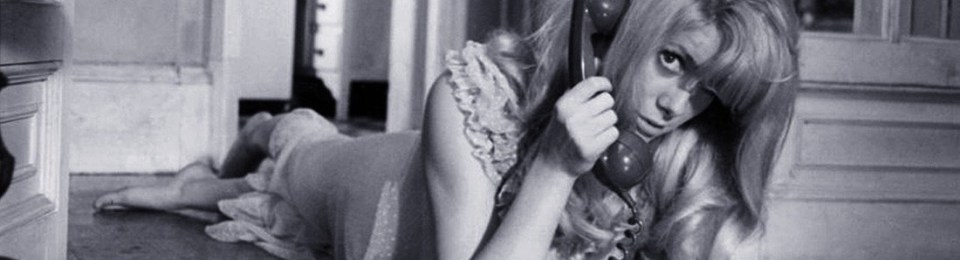
Roman Polanski’s Repulsion (1965) is a masterclass in psychological horror, a film that, even decades later, remains a deeply disturbing exploration of fear, repression, and the dark corners of the human psyche. As Polanski’s sophomore directorial feature, Repulsion has earned its place as one of the most unsettling films in cinema history, despite the director’s own ambivalence toward it. What emerges is a terrifying, claustrophobic journey into madness, supported by exquisite cinematography and innovative sound design that work in tandem to create an atmosphere of unrelenting dread.
The film centers on Carol Ledoux, played with haunting precision by Catherine Deneuve, a young and repressed woman living in London with her sister. Left alone in their apartment, Carol’s already fragile mental state begins to unravel, leading her down a path of violent hallucinations and murderous impulses. Polanski’s portrayal of Carol’s descent into madness is both sympathetic and horrifying, a delicate balance that makes Repulsion as emotionally impactful as it is terrifying.
Polanski’s direction is nothing short of brilliant, transforming the mundane setting of a London flat into a nightmarish landscape where walls crack and hands emerge, where every creak and groan is imbued with menace. The apartment itself becomes a character in the film, its oppressive, decaying interior mirroring Carol’s deteriorating mind. The confined space amplifies her isolation and paranoia, trapping both her and the audience in a relentless downward spiral.
At the heart of Repulsion is an unflinching critique of toxic masculinity and the pervasive fear it instills. Carol’s interactions with men—from her lecherous suitor to her sister’s overbearing boyfriend—are marked by a palpable sense of discomfort and dread. These encounters, though often understated, serve as the catalyst for Carol’s breakdown, revealing the corrosive impact of living in a world where male dominance is both omnipresent and suffocating.
Deneuve’s performance is a tour de force, capturing Carol’s fragile beauty and internal torment with a subtlety that makes her unraveling all the more terrifying. Her portrayal of Carol’s fear and repression is so visceral that it transcends language, relying on physicality and expression rather than dialogue to convey her inner turmoil. It’s a performance that lingers long after the film has ended, leaving an indelible mark on the viewer.
The film’s technical aspects further elevate its nightmarish quality. Gilbert Taylor’s cinematography is stark and unyielding, using deep shadows and disorienting angles to convey Carol’s fractured reality. The camera often lingers on empty spaces or zooms in on seemingly innocuous details, heightening the sense of unease. The sound design, too, plays a crucial role, with everyday noises distorted into something monstrous—whether it’s the ticking of a clock or the sound of a faucet dripping. The recurring use of sound, or the lack thereof, becomes a psychological tool, plunging the audience deeper into Carol’s disturbed mind.
Repulsion is also a study in sexual repression, with Polanski meticulously dissecting the ways in which societal expectations and personal traumas collide to devastating effect. Carol’s increasing detachment from reality is intertwined with her fear of sexual intimacy, a fear that manifests in grotesque hallucinations and violent outbursts. Polanski doesn’t shy away from the horror of this repression, instead forcing the viewer to confront its devastating consequences head-on.
The Prognosis:
Repulsion stands as one of Polanski’s most disturbing works, a film that crawls under the skin and stays there. It may not be Polanski’s favorite among his own films, but it is undoubtedly one of his most powerful. Repulsion is a harrowing examination of the human psyche, where fear, repression, and isolation culminate in a chilling portrait of madness. It’s a film that demands to be seen, not just for its groundbreaking technical achievements, but for its unflinching portrayal of the darkness that can consume us all.
- Saul Muerte
 Surgeons of Horror
Pingback: Sixty Screams of the ’60s: The Ultimate Horror Countdown | Surgeons of Horror