Tags
charles cottier, christian willis, dirk hunter, steven boyle, the demon disorder, umbrella entertainment
The Demon Disorder by Steven Boyle is a horror film that taps into the darker side of family dynamics, exploring themes of toxic masculinity, repressed secrets, and supernatural revenge. While the film has some standout moments, particularly in its special effects, it ultimately falls short of delivering a fully cohesive or compelling experience.
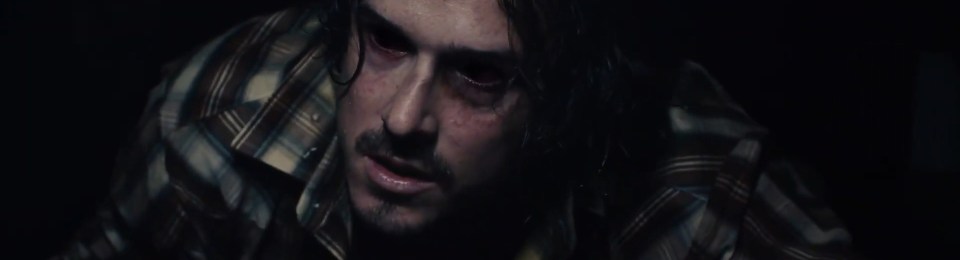
The story revolves around the Reilly family, with the patriarch, played by John Noble, casting a long shadow even after his death. His three estranged sons—Graham (Christian Willis), Jake (Dirk Hunter), and Phillip (Charles Cottier) — are drawn back to their father’s garage, the site where they uncover a buried family secret that unleashes a vengeful force from beyond the grave. As the brothers confront their past and the legacy of their father, they’re forced to reckon with the toxic masculinity that has defined their lives.
One of the film’s strongest elements is its special effects. Boyle clearly knows how to create a sense of dread and terror, with the supernatural elements being both visually striking and unsettling. The scenes of the vengeful spirit manifesting in the garage are genuinely creepy, and the practical effects used to bring these moments to life are a cut above what one might expect from a mid-tier horror film. There’s a visceral quality to the hauntings that keeps the audience engaged, even when the narrative starts to waver.
The film’s thematic exploration of toxic masculinity is also noteworthy. The Reilly brothers are all shaped, in different ways, by their father’s domineering presence. The late patriarch, portrayed with chilling intensity by Noble, represents a man whose illness stripped away his physical strength, but not his overpowering influence. His sons, left to grapple with their own unresolved issues, embody different aspects of the toxic traits they’ve inherited. Graham is the responsible but emotionally distant one, Jake is the angry and rebellious middle child, and Phillip is the youngest, still struggling to find his place. The tension between them is palpable, and the film does a decent job of showing how their father’s legacy has poisoned their relationships with each other.
However, despite these promising elements, The Demon Disorder struggles to maintain a consistent tone or pace. The film often feels disjointed, with the narrative shifting awkwardly between character drama and horror. The brothers’ backstory is hinted at but never fully explored, leaving their motivations and conflicts feeling underdeveloped. This lack of depth makes it difficult to fully invest in their plight, and the emotional beats don’t hit as hard as they should.
Additionally, while the film’s exploration of toxic masculinity is commendable, it can sometimes feel heavy-handed. The script doesn’t always trust the audience to pick up on the nuances of the brothers’ relationships, opting instead for blunt dialogue that spells out the themes rather than letting them emerge naturally from the story. This approach can make the film feel preachy at times, detracting from the horror elements that should be driving the plot.
The performances, while competent, are similarly uneven. John Noble is the standout, even in death, delivering a menacing portrayal of a man whose influence lingers beyond the grave. However, the actors playing the Reilly brothers struggle to elevate their characters beyond the archetypes they’re given. The result is a set of performances that, while not bad, fail to leave a lasting impression.
The Prognosis:
The Demon Disorder is a film with strong ideas and solid technical execution, but it doesn’t quite come together as a whole. The special effects and thematic undercurrents make it worth a watch for horror fans, but the disjointed narrative and uneven character development keep it from being more than a middling effort. It’s a film that hints at greatness but ultimately settles for something more forgettable.
- Saul Muerte
THE DEMON DISORDER is now available to watch at home.
 Surgeons of Horror