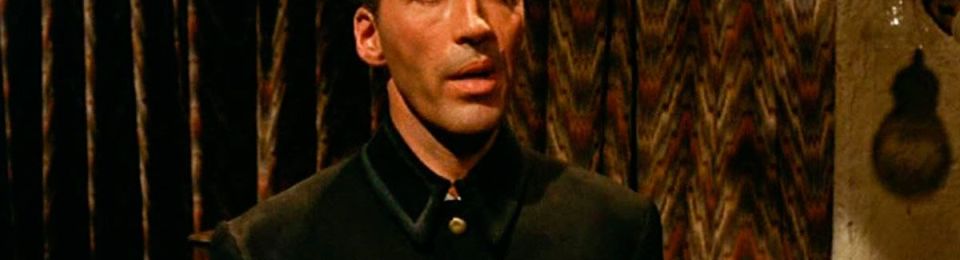
“Horror Castle” (original title: “La vergine di Norimberga”), directed by Antonio Margheriti, is a film that sits at an intriguing crossroads in the evolution of Italian horror cinema. Released in 1963, it embodies many of the characteristics that would come to define the genre during this period. While it offers some chilling moments and atmospheric visuals, it ultimately falls short of its potential, resulting in a middling experience that hints at the greater heights Italian horror would soon achieve.
The 1960s marked a significant era for Italian horror films, with directors like Mario Bava and Riccardo Freda leading the charge. This decade saw the emergence of Gothic horror, characterized by lavish set designs, eerie atmospheres, and a penchant for the macabre. “Horror Castle” is very much a product of its time, drawing heavily on Gothic influences and showcasing the era’s fascination with historical settings and elaborate castles.
One of the film’s strengths lies in its atmospheric setting. The titular castle, with its dark corridors, hidden chambers, and medieval torture devices, provides a suitably creepy backdrop. Margheriti, known for his ability to create compelling visuals on modest budgets, effectively uses shadows and lighting to build suspense. The film’s cinematography, though not as innovative as Bava’s, still manages to convey a sense of dread and unease.
However, “Horror Castle” falters in its storytelling. The plot, which revolves around a woman discovering her husband’s dark secrets in a foreboding castle, is predictable and lacks the twists and turns that could elevate it. The characters are thinly drawn, with little development or depth, making it hard for the audience to become truly invested in their fates. The pacing is uneven, with moments of tension often undercut by slower, less engaging scenes.
The cast, led by Rossana Podestà and Georges Rivière, delivers competent but unremarkable performances. Podestà’s portrayal of Mary Hunter, the film’s protagonist, lacks the nuance needed to fully convey her character’s terror and determination. Rivière, as her enigmatic husband, is similarly one-dimensional. The supporting cast, including the imposing Christopher Lee in a minor role, adds some gravitas, but their characters are underutilized.
Despite its flaws, “Horror Castle” is an interesting piece in the puzzle of Italian horror’s evolution. It showcases the genre’s early attempts to blend Gothic horror with contemporary themes, a combination that would be perfected in later films. The movie’s shortcomings highlight the growing pains of an industry still finding its unique voice, but they also underscore the potential that would soon be realized in masterpieces like Bava’s “Black Sunday” (1960) and Freda’s “The Horrible Dr. Hichcock” (1962).
The Prognosis:
“Horror Castle” is a film that embodies both the promise and the pitfalls of early 60s Italian horror. While it provides a glimpse into the atmospheric and visually driven storytelling that would come to define the genre, it ultimately falls short due to its lackluster narrative and character development. As a piece of cinematic history, it is a worthwhile watch for fans of the genre, offering a window into the formative years of Italian horror. However, as a standalone film, it remains a middling entry that struggles to fully realize its potential.
- Saul Muerte
 Surgeons of Horror