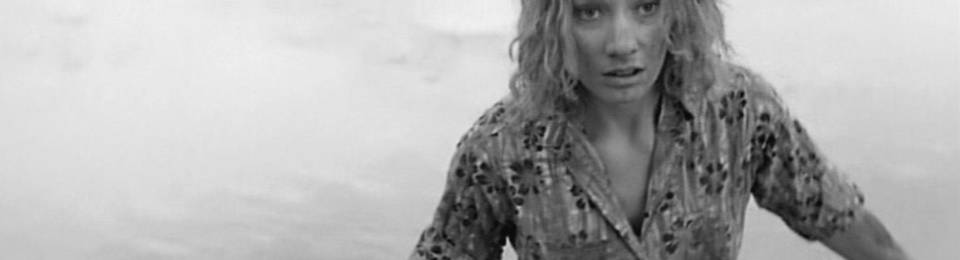
Herk Harvey’s Carnival of Souls is a masterclass in atmospheric horror, a film that continues to haunt viewers more than six decades after its release. Despite its modest budget and relatively unknown cast, this 1962 gem stands as one of the most chilling and influential horror films ever made. Its enduring impact on the genre and its ability to unsettle audiences affirm its status as a classic.
At the heart of Carnival of Souls is Candace Hilligoss, whose portrayal of Mary Henry is nothing short of remarkable. Hilligoss embodies the role with a palpable sense of isolation and disquiet, drawing viewers into Mary’s surreal and increasingly nightmarish world. Her performance is both subtle and powerful, effectively conveying the character’s growing detachment from reality.
The film’s premise is deceptively simple: after surviving a car accident, Mary moves to a new town to start a job as a church organist, only to find herself drawn to an abandoned carnival and haunted by spectral figures. However, under Herk Harvey’s direction, this straightforward plot becomes a deeply unsettling exploration of alienation, mortality, and the thin veil separating the living from the dead.
Harvey, who also plays the film’s most iconic ghoul, demonstrates a keen eye for eerie, otherworldly imagery. The use of real locations, such as the abandoned Saltair Pavilion in Utah, enhances the film’s unsettling atmosphere. The carnival itself, with its decaying structures and desolate landscapes, becomes a character in its own right, embodying the film’s themes of decay and forgotten dreams.
One of the most striking aspects of Carnival of Souls is its dreamlike, almost hypnotic quality. The film’s pacing, editing, and sound design work in concert to create a disorienting and surreal experience. Gene Moore’s haunting organ score underscores this sense of unease, echoing Mary’s own disorientation and descent into a ghostly realm.
The film’s low budget necessitated creative solutions that ultimately enhanced its eerie aesthetic. The stark black-and-white cinematography by Maurice Prather uses shadows and light to great effect, crafting an atmosphere thick with dread and mystery. This minimalist approach, combined with innovative camera work and haunting visual compositions, ensures that Carnival of Souls lingers in the mind long after the credits roll.
While Carnival of Souls initially received little attention upon its release, its influence has grown over the years, inspiring countless filmmakers and becoming a touchstone for the psychological horror genre. Its themes of existential dread and the inescapable pull of death resonate deeply, offering a chilling exploration of the human psyche.
In retrospect, Carnival of Souls is a triumph of independent filmmaking, a film that transcends its limitations to deliver an unforgettable horror experience. Herk Harvey’s singular vision and Candace Hilligoss’s compelling performance combine to create a film that is as thought-provoking as it is terrifying.
For those who appreciate horror that delves into the uncanny and the psychological, Carnival of Souls remains an essential watch. Its ability to unsettle and provoke thought makes it one of the finest examples of the genre—a true testament to the power of atmosphere and suggestion in horror cinema.
The Prognosis:
Carnival of Souls is not just a horror film; it’s an experience, a haunting journey into the unknown that continues to captivate and terrify audiences, securing its place as one of the greatest horror films ever made.
- Saul Muerte
 Surgeons of Horror
Pingback: Sixty Screams of the ’60s: The Ultimate Horror Countdown | Surgeons of Horror